Willow Tree Redwork: A Designer’s Review
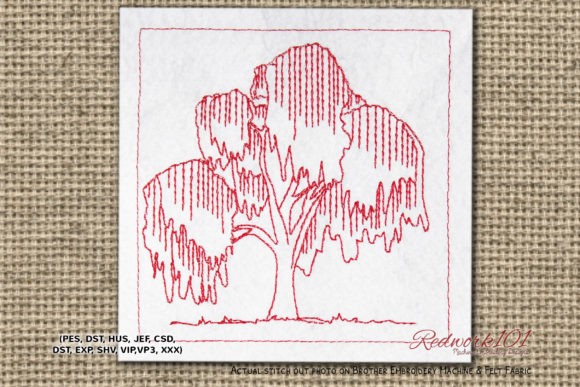
As a designer who spends more time staring at digitized files than I do sleeping, I have learned that the simplest designs are often the hardest to get right. There is nowhere for poor digitizing to hide in redwork. When I first loaded Willow Tree Redwork into my editing software, I wasn’t looking for complexity. I was looking for character. In the world of Forest themed Embroidery, it is easy to fall into the trap of over-digitizing leaves and branches until they look like plastic blobs. This design, however, takes a different approach. It relies on line weight, flow, and negative space.
I recently had a client request a series of custom tote bags for a local botanical garden gift shop. They wanted something elegant but rustic, something that screamed "handmade" without looking amateurish. I pulled up Willow Tree Redwork to see if it could carry the weight of a premium product. Here is my breakdown of how this design performs in real-world applications, from the hoop to the final sale.
First Impressions and Visual Flow
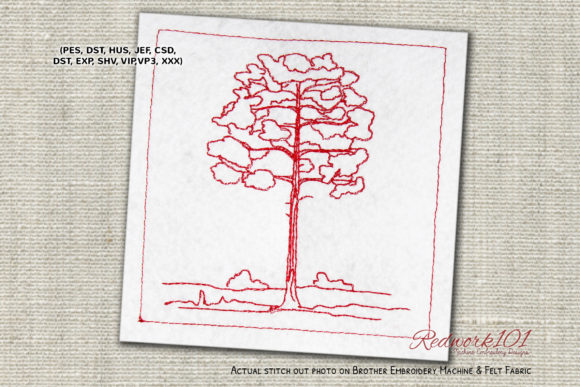
The immediate mood of Willow Tree Redwork is serene. The cascading lines mimic the natural droop of willow branches, creating a sense of movement even when static. For a designer, this flow is critical. If the lines are too rigid, the tree looks like a broom. If they are too loose, it looks messy. This design strikes a balance that feels organic.
One detail noted in the product description is that the Box Stitch shown in promotional pictures is optional. This is a crucial feature for professional use. In many of my projects, I prefer a clean edge without a bounding box, allowing the design to breathe on the fabric. However, having the option to include a border can be useful for specific layouts, such as framed wall art or structured patches. The note that the outer box color differs in most designs unless part of the design itself suggests flexibility. As a reviewer, I appreciate this modularity. It means I am not locked into a rigid frame if my tote bag design calls for a freestanding aesthetic.
Real-World Application: The Tote Bag Test
For the botanical garden project, I chose a heavy canvas tote. Redwork traditionally uses a single thread color, often red, on white or natural linen. For this modern application, I opted for a deep forest green thread on a natural cotton canvas. The contrast was subtle yet sophisticated.
When stitching out Willow Tree Redwork, the performance was solid. Because redwork primarily utilizes running stitches or simple satin accents, the stitch density is generally low. This is a massive advantage for tote bags. High-density designs can cause canvas to pucker or distort, especially if the stabilizer isn't perfect. This design lay flat. The lines were crisp, and the lack of dense fill stitches meant the fabric retained its natural drape. Customers at the shop were drawn to the simplicity. It didn't look like a mass-produced graphic; it looked like a sketch brought to life with thread.
Versatility Across Products
Beyond totes, I evaluated how this machine embroidery design would translate to other common items for Etsy sellers and small shop owners.
- Sweatshirt Embroidery: On a fleece hoodie, the design needs to be large enough to not get lost in the texture. Willow Tree Redwork scales well. The long, flowing lines remain distinct even on textured fabrics, provided you use a cut-away stabilizer to support the stretch.
- Baby Embroidery: For baby blankets or onesies, softness is key. Since this design avoids heavy fill stitches, it remains soft against sensitive skin. It makes for an excellent personalized gift when paired with a name in a complementary script font.
- Embroidered Patch: Creating a patch requires a satin stitch border to prevent fraying. If you use the optional box stitch as a base, this design converts beautifully into a merit-badge style patch. The internal details are clear enough to be recognized at a small size.
- Kitchen Towels: This is perhaps the most traditional use. The lightweight nature of the stitching ensures the towel remains absorbent and flexible. It adds a touch of holiday embroidery charm without feeling bulky.
Technical Considerations and Pitfalls
While Willow Tree Redwork is forgiving, it is not immune to user error. Here are the areas where you need to exercise caution.
Fabric Choice Matters: On thin or slippery fabrics like rayon or silk, the running stitches can pull and pucker easily. You must use a high-quality tear-away or cut-away stabilizer depending on the garment's longevity. For stretchy fabrics like jersey t-shirts, a cut-away stabilizer is non-negotiable. Without it, the tree will distort after the first wash.
Thread Contrast: Redwork relies entirely on line visibility. If you choose a thread color that is too close to your fabric color, the design will vanish. I recommend testing your thread colors on scrap fabric first. A dark thread on a light fabric is safest. If you are doing white-on-white work, ensure your lighting is good and your tension is perfect, as any inconsistency will be glaring.
Hooping and Placement: Because the design features long, vertical lines, hooping stability is vital. If your hoop is loose, the vertical lines may shift, causing misalignment. Always ensure your fabric is drum-tight. Also, consider the hoop size. While the design might fit in a 4x4 hoop, giving it more room allows for better placement options on larger garments like aprons or pillow covers.
Commercial Value and Branding
For craft business owners, the value of a design lies in its sellability. Willow Tree Redwork fits neatly into the "cottagecore" and "nature-inspired" trends that continue to dominate platforms like Etsy. It appeals to buyers looking for understated elegance rather than loud, colorful graphics.
Using this design in your commercial embroidery portfolio can enhance brand consistency. It projects a image of refinement. When customers see a clean, well-stitched redwork design, they associate it with quality. It suggests that the maker cares about detail. This perception increases the perceived value of the finished product, allowing you to price your items higher than those with generic, poorly digitized motifs.
However, always check the licensing terms. The product description mentions the box stitch is optional, but it does not specify commercial rights. Before selling digital embroidery file derivatives or finished goods, confirm whether the license allows for commercial use. Most reputable designers do, but assuming can lead to legal issues.
Final Verdict for Designers
Willow Tree Redwork is a reliable, versatile asset for any designer’s library. It is not flashy, but it is effective. It respects the medium of embroidery by utilizing stitches that enhance rather than overwhelm the fabric. Whether you are creating a custom apparel line, a set of nursery decor, or a simple handmade product for a craft fair, this design delivers.
My advice? Download the file, but do not skip the test stitch. Run it on the exact fabric you plan to use. Check the tension. Adjust the density if your machine runs hot. Once you dial it in, you will find that this willow tree is not just a design; it is a tool for creating calm, beautiful, and profitable pieces. It stands as a testament to the idea that in Embroidery, sometimes less is indeed more.