Review: Three Sheep Grazing in Field Redwork
As a designer who has spent countless hours hooping fabric and trimming threads, I have learned that the simplest designs often present the biggest challenges. When I first loaded the Three Sheep Grazing in Field Redwork file into my software, I was struck by its deceptive simplicity. Redwork is a traditional style that relies entirely on line quality and spacing, leaving no room for error. There are no fill stitches to hide uneven tension and no satin columns to mask poor digitizing. This design, categorized under Farm Animals, offers a charming pastoral scene, but does it hold up in a real-world embroidery project? I put it through its paces to see if it deserves a spot in your digital embroidery file library.
First Impressions and Visual Personality
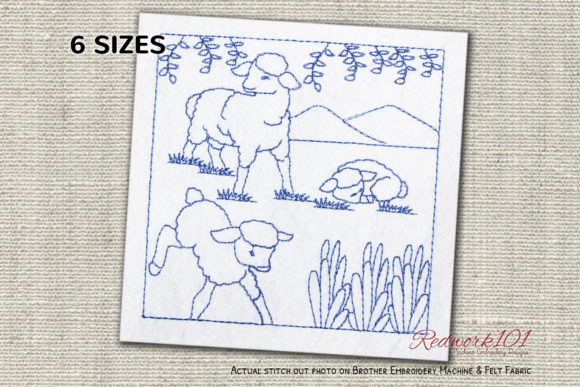
The immediate mood of this design is calm and rustic. The layout features three sheep in various grazing poses, creating a balanced composition that feels organic rather than rigid. What stands out is the use of running stitch to define the forms. In redwork, the negative space is just as important as the thread itself. The spacing between the lines in the wool texture of the sheep appears well-calculated, preventing the design from looking like a solid blob when viewed from a distance.
The optional box stitch mentioned in the product description is an interesting addition. While the outer box can be skipped, I found that keeping it provides a nice frame for specific applications, such as patches or framed hoop art. However, for apparel, I recommend omitting it to maintain a cleaner, more modern aesthetic. The visual personality here is versatile; it leans traditional but fits comfortably within contemporary cottage-core trends that are currently driving sales for many Etsy sellers and small shop owners.
Real-World Application: The Tote Bag Test
To truly evaluate this design, I moved beyond the screen and into the studio. My test case was a natural canvas tote bag, a staple item for craft business merchandise. Canvas is a forgiving fabric, but its texture can swallow fine details if the stitch density is too low. I hooped the bag with a medium-weight cut-away stabilizer to ensure stability during stitching.
The result was delightful. The Three Sheep Grazing in Field Redwork stitched out cleanly, with minimal puckering. The running stitch lay flat against the woven texture of the canvas, creating a subtle, embossed effect that feels high-end. For a handmade product, this tactile quality adds significant value. Customers often associate intricate, clean line work with professionalism. If you are an apparel decorator or a boutique owner, this design translates well to linen aprons or kitchen towels, where the rustic theme aligns perfectly with the product's function.
Versatility Across Products
Beyond tote bags, I considered how this design would perform on other common items. For sweatshirt embroidery, the design works well on the chest or sleeve, provided you use a tear-away stabilizer to prevent stiffness. On baby embroidery projects, such as onesies or burp cloths, the simple lines are gentle and appealing. However, you must ensure the thread colors are soft and non-irritating. For holiday embroidery, particularly Easter or spring-themed gifts, this design is a natural fit. It serves as an excellent base for personalized gifts, where you might add a name in a complementary script font below the grazing scene.
Technical Considerations and Fabric Choices
While the design is robust, it is not without its limitations. Redwork relies heavily on contrast. If you are stitching on dark fabric, you must choose a thread color that pops. Traditional red is classic, but navy, forest green, or even gold can modernize the look. I tested the design on a black cotton tee, and while visible, the fine lines lacked the definition they had on lighter fabrics. For dark garments, consider increasing the stitch count slightly or using a thicker thread weight if your machine allows, though this may alter the delicate nature of the original digitizing.
Stretchy fabrics pose another challenge. The open nature of redwork means there is less thread coverage to stabilize the fabric. If you are applying this to a jersey knit or a curved surface like a cap, proper stabilization is non-negotiable. I recommend using a fusible stabilizer on the back of the fabric before hooping to prevent distortion. Without it, the running stitch may pucker the fabric, ruining the clean lines of the sheep.
Designer Notes for Best Results
Before you commit to a large production run or list this as a new item in your online store, take these practical steps:
- Test on Scrap Fabric: Always stitch a sample on the same material you intend to use for the finished product. This helps you gauge tension and thread breaks.
- Check Thread Contrast: View your design in black and white mockups. If the design disappears in grayscale, it will likely lack impact in real life.
- Review Stitch Density: Although redwork is generally low density, ensure the connecting jumps are minimized to reduce trimming time.
- Confirm Hoop Size: Verify that the design fits comfortably within your hoop, leaving at least an inch of margin on all sides for clamping.
- Inspect Small Details: Zoom in on the faces and legs of the sheep. Ensure the lines are continuous and do not have unnecessary stops that could cause loose threads.
Commercial Viability and Brand Consistency
For commercial embroidery projects, consistency is key. This design offers a reliable level of detail that reproduces well across multiple units. For an Etsy seller or digital product seller, offering this as part of a bundle with other farm animals could increase average order value. The design’s clarity ensures that even when shrunk for smaller items like embroidered patches, the essential shapes remain recognizable.
However, always check the licensing terms provided with the digital embroidery file. Some creators allow unlimited sales of finished physical items but restrict the resale of the design itself. Understanding these boundaries protects your craft business and maintains professional integrity. When used correctly, Three Sheep Grazing in Field Redwork enhances brand consistency for shops focused on rustic, handmade, or agricultural themes. It signals attention to detail and a respect for traditional crafts, which resonates deeply with buyers seeking authentic, personalized gifts.
Final Verdict
In conclusion, this design is a strong contender for any designer’s library. It balances aesthetic charm with technical practicality. While it requires careful fabric selection and stabilization, the payoff is a polished, professional-looking finished product. Whether you are creating custom apparel for a local farm stand or designing holiday gifts for friends, this redwork pattern delivers. It reminds us that in embroidery, sometimes less is indeed more, provided the lines are true and the vision is clear.